


How to Improve Home Listening Experience: 2026 Guide
Table of Contents
- Start With Speaker Placement for Best Sound
- Tune Room Acoustics for Music Listening
- Reduce Echo in a Listening Room Without Killing the Sound
- Get Your Home Audio System Setup Right From the Start
- Find the Listening Position That Transforms the Experience
- When to Upgrade Components (And When to Just Adjust)
- Common Mistakes That Hurt Home Listening Quality
- Frequently Asked Questions
Last Updated: October 12, 2026
Start With Speaker Placement for Best Sound
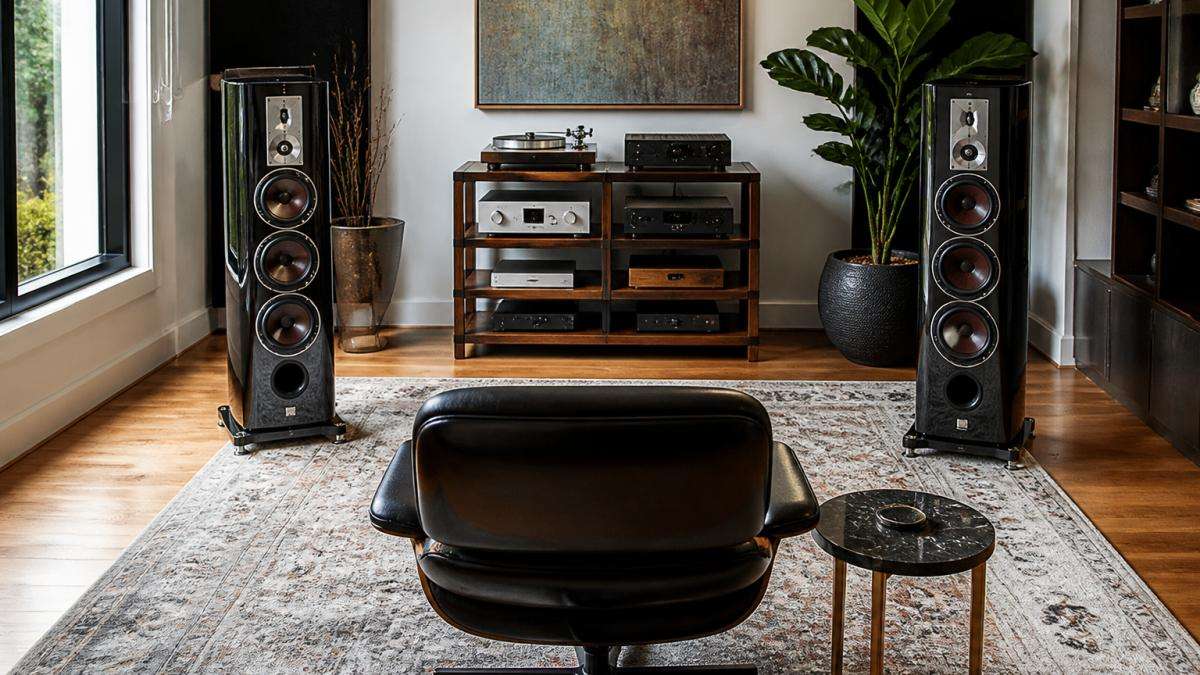
The single biggest change to how to improve home listening experience costs nothing: move your speakers. Before you buy anything, position them so you and both speakers form an equal-sided triangle.
Speaker placement for best sound means treating your room as part of the system. A well-placed pair of speakers in an average room will outperform expensive gear shoved into corners. At The Voice That Is, we have set up systems in various listening environments. Placement decides more than most people expect.
The Equilateral Triangle Rule
Sit in your main chair. Measure the distance from your ears to each speaker. Now measure the gap between the two speakers. Those three distances should be roughly equal.
- Start with speakers about 6 to 8 feet apart
- Angle each speaker inward so it points at your ears, not straight ahead
- Keep your head at the same height as the tweeters
- Move your chair, not just the speakers, when fine-tuning
Small shifts matter. A few inches can change how voices and instruments lock into place.
Distance From Walls and Corners
Push a speaker into a corner and bass builds up fast. Pull it out and the sound tightens.
- Keep speakers at least 2 feet from the wall behind them
- Keep them at least 3 feet from side walls if you can
- Avoid placing them in actual corners
- If space is tight, try foam plugs in rear ports
The goal is a clean, even low end. Corners fight that.
Tune Room Acoustics for Music Listening
Room acoustics for music listening is about balance, not perfection. Every room shapes sound. You are not fighting the room; you are working with it.
Hard surfaces reflect sound. Soft surfaces absorb it. Too much of either creates problems.
- Bare floors and glass walls make sound harsh and bright
- Heavy carpets and thick curtains can make a room sound dead
- The fix is usually a mix of both
Start with what you already own. A rug, a bookshelf, and a sofa all change how a room behaves. You do not need to buy acoustic panels on day one.
Clap your hands once in the middle of the room. If you hear a sharp slap-back, you have a reflection problem. A rug and a curtain often fix more than people expect.
Reduce Echo in a Listening Room Without Killing the Sound
To reduce echo in a listening room, add soft material at the first reflection points: the walls and floor between you and each speaker. This is where early reflections hit and smear the sound.
The trick is not covering every surface. Over-absorbing makes music sound flat and lifeless.
- Place a rug on the floor between you and the speakers
- Hang a curtain or tapestry on the side walls
- Add a bookshelf behind the listening chair
- Leave the ceiling alone unless the echo is severe
Treat one wall, listen, then treat another. Change one thing at a time so you can hear what worked.
Covering all four walls with foam panels is a common mistake. It kills the liveliness that makes music feel real. Treat the reflection points, not the whole room.
Get Your Home Audio System Setup Right From the Start
Good home audio system setup starts with clean power and solid connections. Most “upgrade” money is better spent here first.
Cables, Power, and Source Quality
Cables do not need to be exotic, but they should be secure and the right length. Loose connections cause noise and dropouts.
- Use cables long enough to reach without strain
- Keep power cables away from signal cables
- Plug your gear into a quality power conditioner or a dedicated outlet
- Start with the best source you own, then improve from there
Source quality sets the ceiling. A compressed file will never sound like a well-recorded album, no matter the system.
Federal Trade Commission guidance on amplifier power ratings helps explain why wattage claims vary so much between brands.
Find the Listening Position That Transforms the Experience
Your seat is a component. Move it and the whole system changes.
The best listening position sits at the point of the triangle, slightly closer to the speakers than the back wall. Avoid sitting against a wall, where bass piles up behind you.
- Keep your ears at tweeter height
- Sit away from the rear wall by at least a few feet
- Center yourself between the speakers
- Try moving forward or back a foot and listen
A foot of movement can reveal detail you never noticed. This is the cheapest upgrade in audio.
When to Upgrade Components (And When to Just Adjust)
Upgrade only after you have maxed out placement, room, and setup. If those three are dialed in and something still feels missing, then a component change makes sense.
Ask one question first: what is actually missing? More bass? Better detail? A wider image? Match the fix to the problem.
- Placement and room fixes are free or cheap
- Cables and power are low-cost gains
- Speakers and amps are the big spend
Consumer Reports guide to buying audio gear offers a plain-language look at what actually changes sound.
This is where a dealer earns their keep. At The Voice That Is, we audition by appointment so you hear components in a real system, not a showroom. We carry brands like TIDAL Audio and Bricasti Design, and we match them to your room and your goals. Acoustical Society of America resources on room acoustics is a solid starting point if you want to go deeper.
| Problem | Likely Cause | Fix |
|---|---|---|
| Boomy bass | Speakers near corners | Pull speakers out, add port plugs |
| Harsh highs | Bare, reflective room | Add rug and curtains |
| Flat, dead sound | Too much absorption | Remove some soft material |
| Blurry image | Poor placement | Rebuild the triangle |
| Missing detail | Weak source | Improve source quality |
Common Mistakes That Hurt Home Listening Quality
Most problems come from a short list of habits. Fix these and your system sounds better today.
- Pushing speakers into corners for looks
- Sitting against the back wall
- Covering every surface with foam
- Buying gear before fixing the room
- Using a weak source and blaming the speakers
- Changing five things at once
Change one thing, then listen. That is how you learn what your room and system actually do.
Placement, room, and seat position decide most of what you hear. Upgrade gear only after those three are right.
Frequently Asked Questions
How can I improve the sound quality of my home audio system without buying new equipment?
Speaker placement and room treatment deliver the biggest gains before you spend a dollar on gear. Move your speakers away from walls and corners, angle them toward your listening position, and form an equilateral triangle. Add a rug, curtains, or bookshelves to soften hard reflections. Many listeners find these adjustments alone make their existing system sound noticeably better. For a professional assessment tailored to your room, an appointment-based consultation can identify exactly what your space needs.
Where should I place speakers for the best sound?
Start with an equilateral triangle: your two speakers and your head should form three equal sides. Aim the tweeters at ear level when seated. Pull speakers at least 2 to 3 feet from the wall behind them to reduce bass buildup, and keep them away from side walls and corners. Small adjustments in toe-in angle and distance can shift imaging and bass response significantly, so experiment in small increments before settling on a final position.
Can rugs and curtains really reduce echo in a listening room?
Yes. Hard surfaces like bare floors, glass, and drywall reflect sound waves, creating echo and smearing detail. A thick area rug, heavy curtains, and upholstered furniture absorb those reflections. You do not need to cover every surface. Treating the first reflection points on the side walls and the wall behind the listening position often makes the biggest difference. The goal is balance: too much absorption makes a room sound dead and lifeless.
Do I need to upgrade my speakers to get better sound, or is my room the problem?
In most cases, the room and setup matter more than the speakers. A high-quality speaker in a poorly treated room can sound worse than a mid-range speaker in a well-optimized space. Before upgrading, try repositioning your speakers, adding acoustic treatment, and checking your listening position. If the sound still lacks the refinement, depth, or emotional engagement you want, that is the right time to audition new components with a specialist who can match gear to your room and musical taste.
Getting a room to sound its best takes patience, and most people stop too early. If you have adjusted placement, treated the room, and dialed in your seat and something still feels off, that is the moment to bring in help. The Voice That Is offers appointment-based auditions, expert system matching, and access to world-class brands like TIDAL Audio, Bricasti Design, and Dohmann. Call 610.359.0189 to start building a system that lets you hear the distinct voice of your music.